DATA CABLING & NETWORKING
•8 min read•Updated November 2026
Data Cabling for Homes UK: Cat6 vs Cat6a Residential Network Guide
GP
By Gary Pearce
Lead Security & Telecommunications Engineer • 25+ Years On The Tools • £10M PLI • professional engineering standards
Listen to Article
Audio Version
Narrated by Gary Pearce • British English
The Verdict at a Glance (TL;DR)
For modern UK homes in 2026, solid copper Cat6a is the recommended standard, delivering full 10Gbps bandwidth up to 100 metres with superior alien crosstalk rejection compared to standard Cat6. Professional fitting routes cables invisibly under floorboards and loft cavities into flush wall faceplates.
Key Specifications & Architectural Highlights
Core StandardCat6a supports full 10Gbps
Cat6a supports full 10Gbps speeds up to 100 metres; standard Cat6 drops to 1Gbps beyond 37–55m.
Engineering HighlightCat6a features internal foil shield
Cat6a features internal foil shielding (STP/FTP) that eliminates power cable interference.
Hardwired Ethernet eliminates Wi-Fi latency, buffering, and packet loss for gaming and work.
Whether you are building a new luxury home, renovating a period property, or rewiring for high-speed home working, smart home automation, and 4K CCTV, structured network cabling is the foundational nervous system of your property. In the UK, the two primary Ethernet cable standards specified for residential and commercial installations are Category 6 (Cat6) and Category 6A (Cat6A Augmented). While both cables look identical to the untrained eye, their internal copper construction, shielding standards, bandwidth capacity, and installation costs differ significantly. In this definitive trade guide, certified cabling specialist Gary Pearce breaks down the exact technical differences to help you choose the right cable for your home.
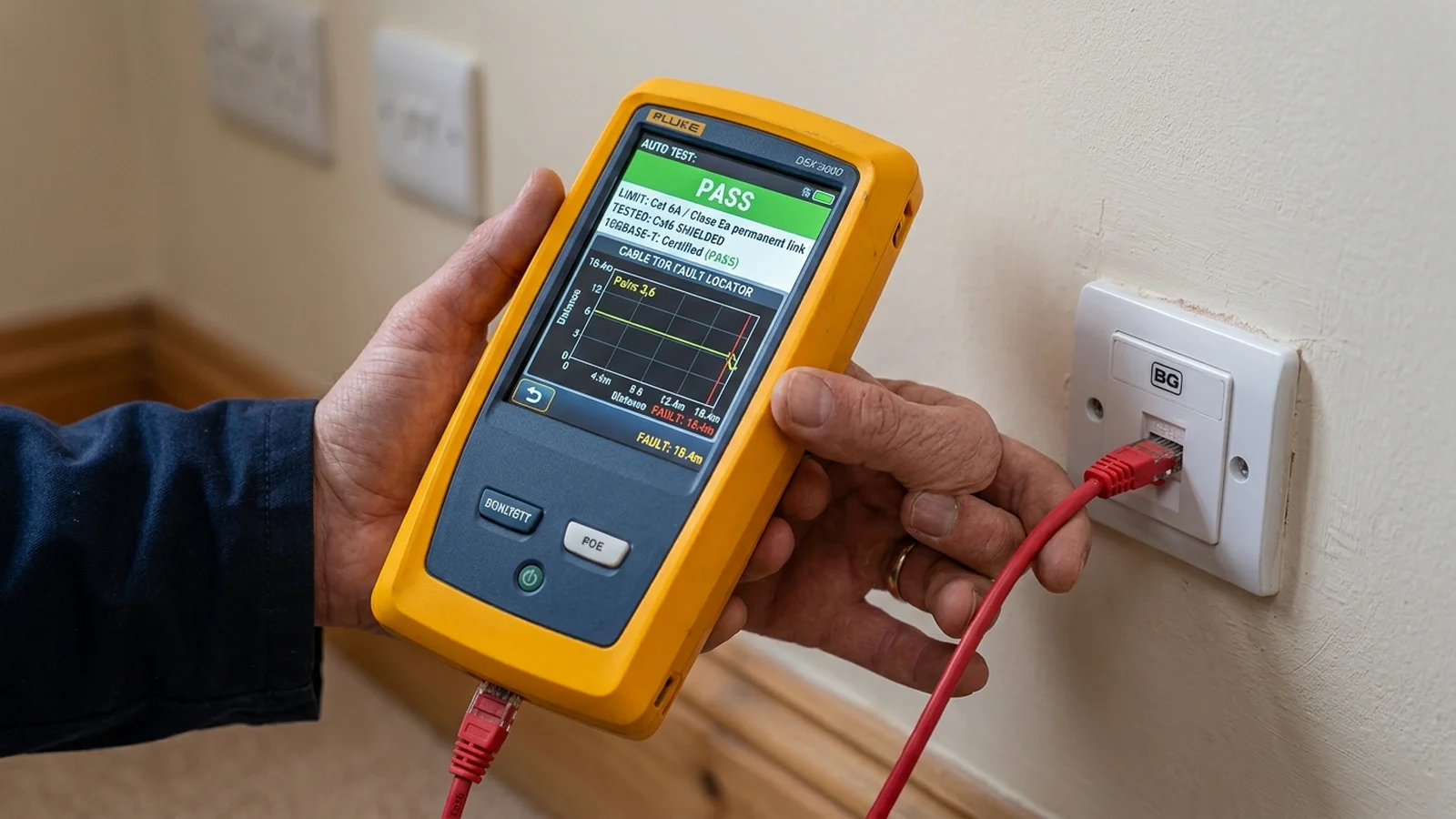
📷 Verified Field PhotoFluke DSX-8000 calibrated cable analyser certifying 10Gbps channel transmission on pure solid copper Cat6A.
⚡ The 10Gbps Distance Threshold
Both Cat6 and Cat6A are capable of transmitting blazing 10-Gigabit Ethernet (10GBASE-T). However, standard Cat6 can only sustain 10Gbps up to a maximum distance of 37 to 55 metres under ideal conditions, falling back to 1Gbps over longer runs. Cat6A, by contrast, operates at double the bandwidth (500MHz) and is certified to deliver full 10Gbps over the complete 100-metre (328ft) channel with zero packet loss.
Field Engineering Masterclass
garden office connectivity fibre vs wireless masterclass
1. Cat6 vs Cat6A: Technical Specification Benchmark
Technical Parameter
Category 6 (Cat6)
Category 6A (Cat6A Augmented)
Frequency Bandwidth
250 MHz
500 MHz (Double the capacity)
Max Speed at 100m
1,000 Mbps (1 Gbps)
10,000 Mbps (10 Gbps)
Max Speed at < 37m
10,000 Mbps (10 Gbps)
10,000 Mbps (10 Gbps)
Cable Outer Diameter
5.2mm – 6.0mm (Slim & Flexible)
7.2mm – 8.8mm (Thick & Rigid)
Backbox Depth Required
25mm or 35mm standard box
35mm or 47mm deep backbox
Alien Crosstalk (ANEXT)
Moderate resistance
Near-Zero (Individual foil pairs)
2. Alien Crosstalk & Foil Shielding
Physical Cable Architecture
2026 Engineering Blueprint
Cable Anatomy: Cat6 Plastic Cross-Spline vs Cat6A Shielded Foil Pairs
Cat6 UTP (250 MHz)
• Outer diameter: 5.5mm (Flexible)
• Fits standard 25mm shallow backboxes
• 10Gbps supported up to 37–55 metres
Cat6A F/UTP (500 MHz)
• Outer diameter: 7.5mm–8.5mm (Rigid)
• Requires deep 35mm–47mm backboxes
• 10Gbps guaranteed over full 100m channel
When dozens of network cables are bundled together inside a tight conduit, loft tray, or stud partition, electromagnetic signals can bleed from one cable into adjacent cables. This phenomenon is called Alien Crosstalk (ANEXT):
Cat6 Architecture: Typically unshielded (UTP), utilizing an internal plastic cross-spline to separate the four twisted pairs. While sufficient for 1Gbps, at 10Gbps frequencies (above 250MHz), bundled Cat6 cables suffer packet loss from alien crosstalk.
Cat6A Architecture: Manufactured as Shielded (F/UTP or S/FTP), where each twisted pair or the outer bundle is wrapped in aluminium Mylar foil. This creates an impermeable shield against electromagnetic interference (EMI) from mains 230V wiring and adjacent data streams.
3. Beware the Dangerous "CCA" Cable Scam
When purchasing network cable online, beware of ultra-cheap reels labelled "CCA" (Copper Clad Aluminium). CCA cables substitute pure solid copper conductors with cheap aluminium coated in a microscopic wash of copper:
Why CCA Cables Violate UK Building Regulations:
❌ High Electrical Resistance: Causes severe voltage drops over distance, making it dangerous for Power-over-Ethernet (PoE) cameras.
❌ Fire Hazard: Under high PoE loads, CCA cables overheat rapidly and fail UK CPR (Construction Products Regulation) fire safety ratings.
❌ Brittleness: Aluminium bends fatigue quickly and snap inside plasterboard during installation.
Our engineers install exclusively 100% Solid Bare Oxygen-Free Copper cable with Euroclass CPR fire certification.
📷 Field BenchmarkStructured network cables routed through internal stud partitions terminating in shielded RJ45 modules.
Bend Radii, 10Gbps Distance Limits & Alien Crosstalk Shielding
BLUF Direct Answer: Standard Cat6 supports 10Gbps speeds up to 35-55 metres in domestic settings, making it easier to pull through tight studs, whereas Cat6A features thick internal shielding and 500MHz bandwidth supporting 10Gbps across the full 100-metre standard with zero alien crosstalk.
When rewiring a home, choosing between Cat6 and Cat6A involves balancing future bandwidth against practical installation constraints. Cat6 cable is flexible, inexpensive, and easily supports 10 ultra-fast multi-gigabit throughput over domestic runs under 35 metres. For 95% of UK residential properties, high-quality solid copper unshielded Cat6 (U/UTP) is more than sufficient.
However, Cat6A operates at double the frequency (500MHz vs 250MHz) and incorporates internal pair separators and foil shielding (F/UTP). This makes Cat6A noticeably thicker (approx. 7.5mm vs 5.5mm diameter) with a much stiffer bend radius. It requires deeper backboxes (minimum 35mm to 47mm) and careful grounding of shielded drain wires to prevent ground loop hum.
Find the optimal transmission medium between your main home and garden studio based on trenching practicality, line of sight, electrical earthing zones, and distance.
Recommended SolutionArmoured Cat6 SWA CableSteel wire armour buried at 450mm
Ground Loop SafetyEarth ShieldedSingle-end bonding per BS 7671
Verified Technical Protocol
How to Terminate Cat6 and Cat6A Keystone Jacks Correctly
Professional data cabling punch-down and certification procedure.
1
Strip Outer Jacket Without Nicking Cores
Use a rotational cable stripper set to exact jacket depth to preserve insulation on all 4 twisted pairs.
2
Maintain Tight Pair Twists to Terminal Point
Do not untwist pairs more than 6mm before punch-down to eliminate Near-End Crosstalk (NEXT).
3
Punch Down to T568B Standard
Align color codes to the T568B convention (White/Orange, Orange, White/Green, Blue, White/Blue, Green, White/Brown, Brown).
4
Verify Wiremap & Continuity with Fluke Tester
Plug in an enterprise cable certifier to verify pin-for-pin continuity, wiremap, and return loss.
4. Gary's Verdict: Which Cable Should You Choose?
Choose Cat6 if: You are retrofitting an existing finished home where thin, flexible cable is needed to navigate tight stud walls and 25mm shallow backboxes. In 95% of typical UK homes where cable runs are under 35 metres, Cat6 delivers flawless 10Gbps speeds at lower cost.
Choose Cat6A if: You are doing a ground-up new build, full renovation, or commercial office with cable runs exceeding 40 metres, or running data lines alongside high-voltage mains power. Cat6A is the ultimate future-proof investment for the next 25 years.
Cat6 vs Cat6A Construction: Shielding & Alien Crosstalk00:00
Beware the Dangerous CCA (Copper Clad Aluminium) Online Scam01:30
Backbox Depths & Minimum Bend Radius Considerations03:00
Fluke DSX-8000 Certification for 10GBASE-T Networks04:40
Gary Pearce Field Commentary:
"If you're retrofitting an existing home, Cat6 is thin, flexible, and handles 10Gbps across typical domestic runs up to 35 metres. But if you're building a new extension or doing a full renovation, run Cat6A. It has double the bandwidth and is 100% future-proof for the next 25 years."
The ADI Trade Podcast • Technical Debrief
Audio Deep Dive: Home Data Cabling: Cat6 vs Cat6a Comparison
An ADI Communications dual-engineer technical audio briefing analyzing real-world trade secrets and customer pitfalls.
⏱️ 5:30 BriefingReady to Play
Listen to Dual-Speaker BreakdownGary Pearce (Lead Engineer) & Sarah Jenkins (Analyst)
Field Engineering Audio
Live Conversational Transcript:
Gary PearceLead Systems Engineer
"Welcome to the ADI Technical Debrief. I'm Gary Pearce, lead engineer at ADI Communications. Today we're settling the Cat6 versus Cat6a debate for UK home networks."
Sarah PearceTechnical Co-Host
"And I'm Sarah Jenkins. Cat6a is frequently specified for commercial data centres, but does a standard 4-bedroom domestic house actually need Cat6a?"
Gary PearceLead Systems Engineer
"In a residential home, cable runs rarely exceed 35 metres. Standard solid copper Cat6 delivers full 10-High-Speed Throughput up to 55 metres. Cat6a is significantly thicker, stiffer, and harder to pull through stud walls."
Sarah PearceTechnical Co-Host
"When do you specifically recommend Cat6a over Cat6?"
Gary PearceLead Systems Engineer
"For long runs over 60 metres, bundles running alongside high-voltage electrical conduits, or high-power 90-watt PoE++ smart home automation infrastructure."
About The Author & Lead Engineer
Gary Pearce
Founder and master installer at ADI Communications with over 25 years on the tools across Yorkshire, Lancashire, Cheshire, and the North. Specialist in CAI-benchmarked satellite arrays and double-screened WF100 cabling, 4K security surveillance, wireless fire safety, and smart Grade 2 intruder alarms.
What is the difference between Cat6 and Cat6a data cabling?
Cat6 supports 1Gbps up to 100 metres and 10Gbps up to 37–55 metres. Cat6a (Augmented) operates at 500MHz and supports full 10Gbps speeds up to the complete 100-metre distance with superior shielding against electrical interference.
Will installing Ethernet cables make a mess of my decor?
No. Professional installers run cables discretely through loft spaces, under floorboards, down stud cavities, or along external mortar lines in UV-rated sheath, finishing in flush wall faceplates that match your existing electrical sockets.
Is hardwired data cabling really better than Wi-Fi 6 or 7?
Yes, significantly. Even the latest Wi-Fi standards suffer from packet loss, latency spikes, and signal degradation through walls. Solid copper Cat6a delivers consistent 0.5ms ping times and full symmetrical bandwidth regardless of how many devices are connected.
Can Cat6a cables power devices like CCTV cameras and access points?
Yes. Cat6a supports Power over Ethernet (PoE, PoE+, and PoE++), delivering up to 90 watts of electricity alongside high-speed data down a single cable, eliminating the need for extra power sockets.
What is Copper Clad Aluminium (CCA) and why should it be avoided?
CCA is an inferior cable with an aluminium core coated in a thin layer of copper. It is prone to snapping, causes voltage drops over distance, poses a fire hazard with PoE, and fails UK building regulations. We strictly use 100% solid annealed copper.
Local Structured Cabling
Commercial-Grade Cat6 & Cat6a Ethernet Drops Across Yorkshire & the Midlands
Fluke DSX-8000 certified 10Gbps data cabling, discrete external UV-resistant runs, and multi-room network sockets installed by Gary Pearce across our local centers:
Director & Senior Field Engineer • ADI Communications
25+ Years On The Tools
Gary Pearce founded ADI Communications in 1999 and has personally completed over 3,500 domestic and commercial data cabling, Starlink, CCTV, and aerial installations across Yorkshire and Lancashire. Certified in NVQ Level 3 Data Cabling & Fibre, City & Guilds Electrical, and backed by £10 Million Public Liability Insurance.
No pushy salespeople or high-pressure contracts. Get fixed upfront equipment pricing, honest engineering advice, or book an appointment across Yorkshire & the North.
Regional Engineering Hubs & Trade Solutions
Professional Installation by Gary Pearce (professional engineering standards)
Call Gary: professional engineering standards
Need hands-on trade installation? ADI Communications operates dedicated metropolitan engineering hubs across the North, providing same-day surveys, clean in-wall cable concealment, and guaranteed 5-year trade warranties.
“Friendly, knowledgeable and tidy install. Gary knows his craft inside out — transparent pricing, spotless work and tested to perfection.”
Verified UK Customer • Verified Review
Gary Pearce • Lead Engineer
25+ Years Hands-On Experience
Yorkshire • Lancashire • Midlands
UK Trade Engineering Reference & Field Standards
Complete Physical Engineering & Diagnostic Guide: Data Cabling for Homes UK: Cat6 vs Cat6a Residential Network Guide
Across Yorkshire, Lancashire, Greater Manchester, Cheshire, Humberside, Nottinghamshire, and Teesside, homeowners and commercial facility managers rely on ADI Communications for physical low-voltage engineering that performs reliably for 10 to 15+ years. Whether you are researching Data Cabling for Homes UK: Cat6 vs Cat6a Residential Network Guide, planning a domestic security or connectivity upgrade, or diagnosing an intermittent signal or network fault, understanding the physical layer—cabling conductors, optical physics, radio-frequency attenuation, and structural wall fixings—is essential to avoiding costly mistakes.
Unlike national call-centre franchises and lead-generation directories that subcontract work to unvetted handymen using cheap Copper-Clad Aluminium (CCA) wire and indoor-grade plastic plugs, Lead Engineer Gary Pearce carries out every site survey, physical installation, and calibrated meter test personally. With over 25 years of hands-on trade experience since 1999 and formal NVQ qualifications across Aerials & Satellite (Level 1–3), Data Cabling & Fibre (Level 1–4), Electrical (Level 1–3), and CCTV Security Systems, our engineering protocols are built around British Standards (BS EN 62676-4, BS 5839-6, BS 7671, and EN 50131 Grade 2).
01 • Pure Copper Infrastructure
100% Solid Bare Copper Cabling (Zero CCA)
Every metre of external and internal cable we install—whether Cat6/Cat6A Ethernet for PoE security cameras and Wi-Fi 6 access points, or CAI-benchmarked WF100 twin-screened foam-dielectric coaxial cable for Freeview HD and satellite feeds—uses 100% solid 23AWG/24AWG oxygen-free bare copper. Solid copper prevents IEEE 802.3af/at PoE voltage drop over long runs, eliminates high-frequency RF skin-effect attenuation, and resists brittle snapping or galvanic corrosion inside damp exterior junction boxes.
02 • Structural Substrate Anchoring
Engineered Fixings for Stone, Brick & Drywall
Northern and Midland properties span Victorian millstone grit, Yorkshire sandstone, Accrington engineering brick, lime-mortar cobbles, and modern dot-and-dab insulated plasterboard. We match every bracket to the exact wall substrate: heavy-duty hot-dip heavy-duty galvanised storm brackets and twin stainless-steel chimney lashing cradles for rooftop Starlink and aerial masts; steel-cored CoreFix 100 dot-and-dab bridge anchors and M6 SnapToggle hollow-wall toggles (rated to 120kg) for large-screen OLED/QLED TV wall mounting.
03 • Calibrated Meter Verification
Fluke Networks & Spectrum Analyser Testing
Guesswork has no place in professional telecommunications. Before any job is signed off, we verify physical-layer performance using calibrated instruments: Fluke Networks cable verifiers for Cat6/Cat6A wiremap continuity, pair skew, and PoE load voltage under night-time LED surge; digital RF spectrum analysers measuring Modulation Error Ratio (MER ≥ 32dB) and pre-Viterbi Bit Error Ratio (BER) across UHF Freeview multiplexes; and SpaceX Starlink 110° phased-array sky-obstruction telemetry.
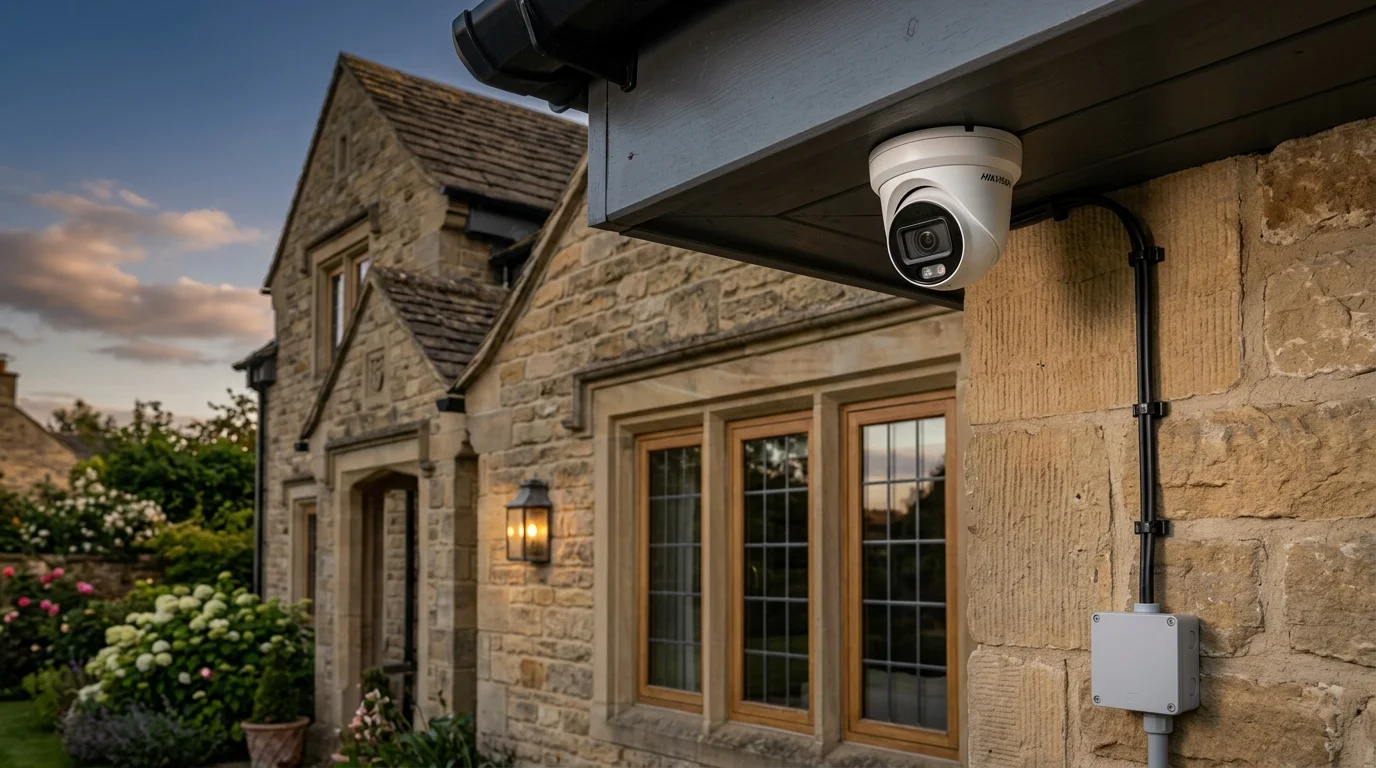
4K ColorVu & TiOC Surveillance
F1.0 super-aperture 24/7 full-colour night vision turrets fitted with IP66 weather-sealed aluminum junction bases and pure copper Cat6 PoE cabling.
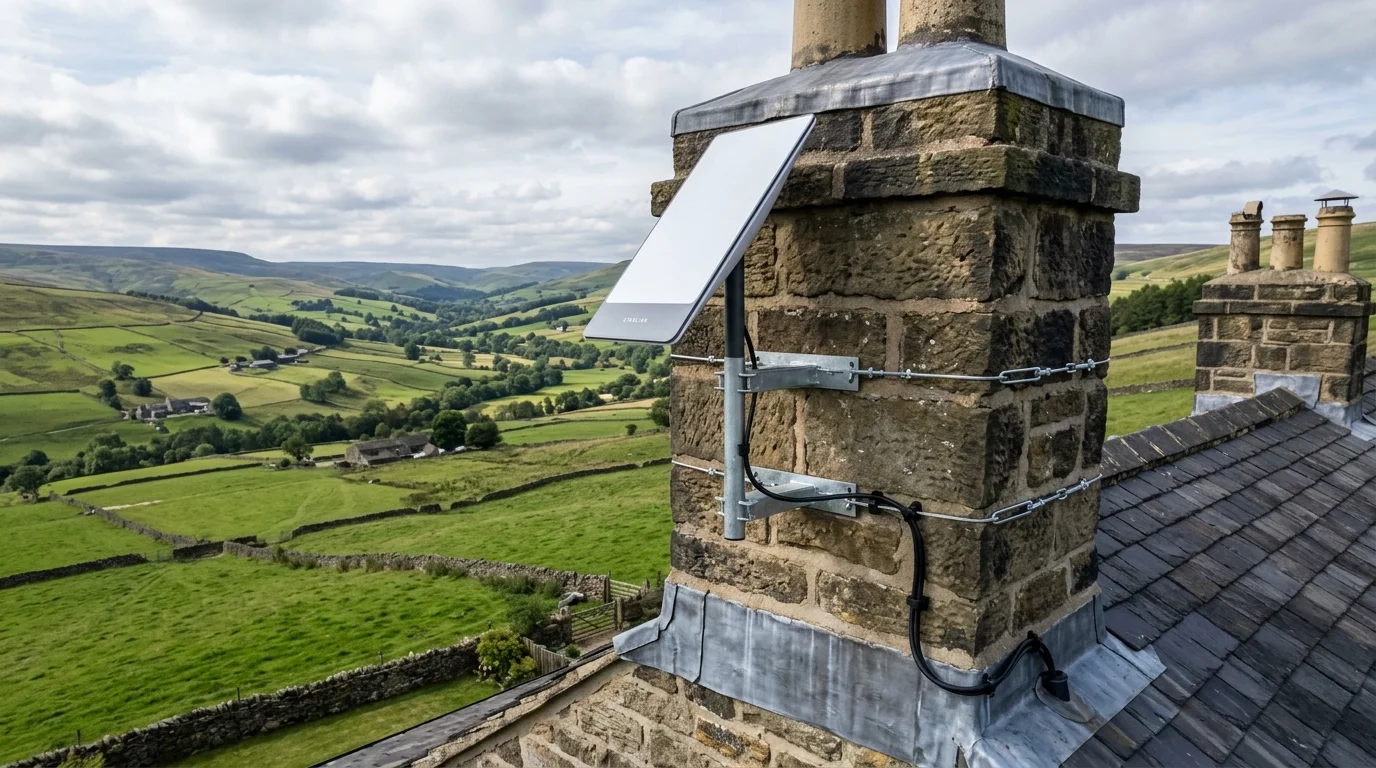
SpaceX Starlink Gen 3 Roof Engineering
Non-drill stainless steel chimney lashing cradles and galvanised gable apex brackets rated for 90mph severe gales with 0.0% sky obstruction.
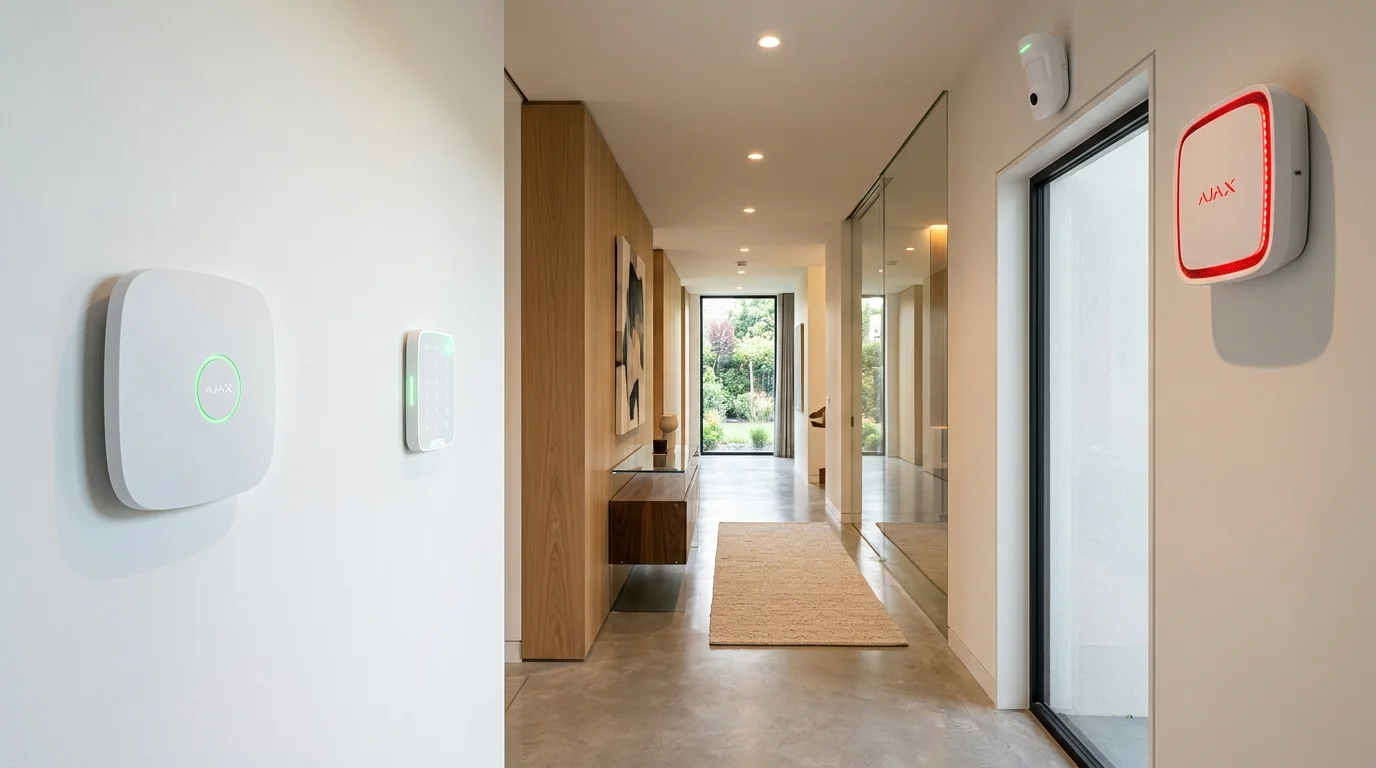
Ajax EN 50131 Grade 2 Smart Alarms
Encrypted 2,000m Jeweller frequency-hopping radio with 0.15s MotionCam photo verification, dual-path SIM backup, and £0 monthly fees.
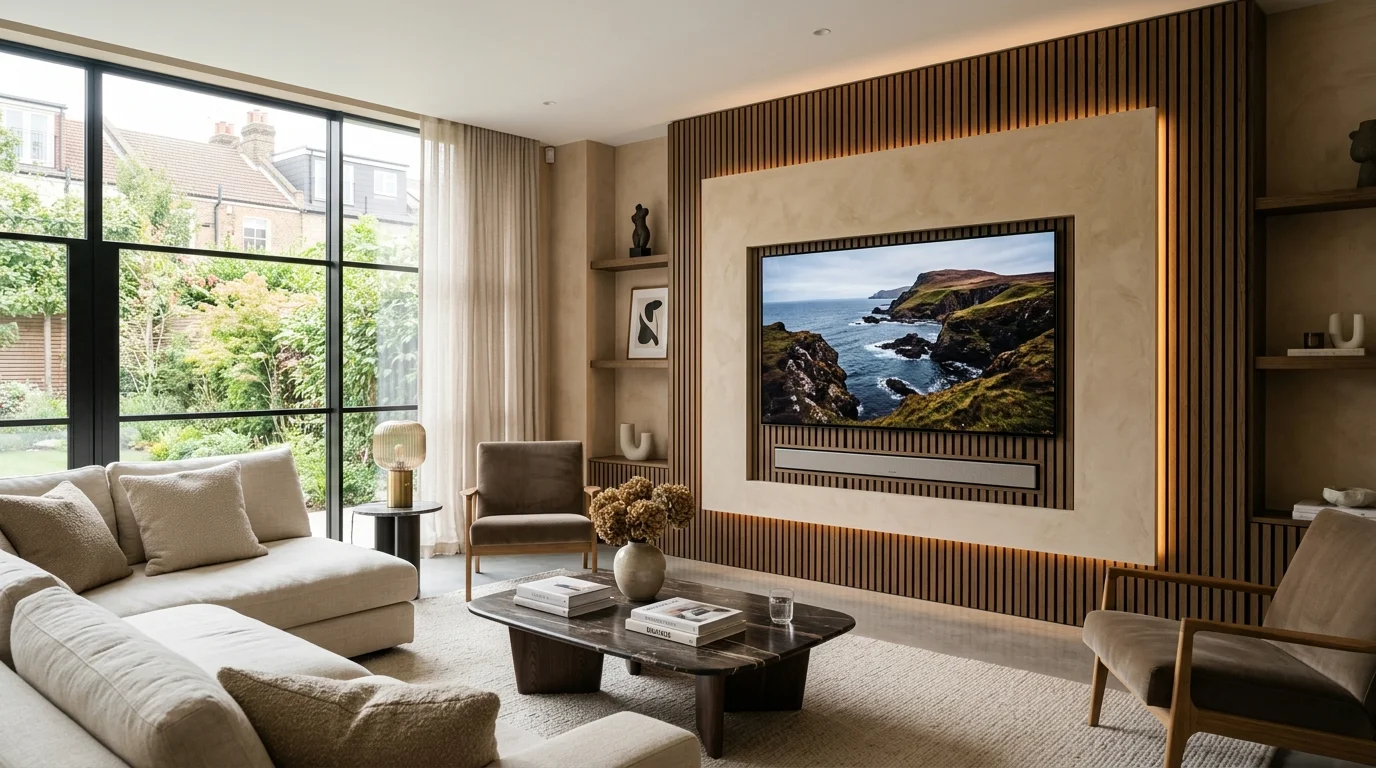
Architectural TV Wall Mounting
Precision laser-levelled brackets for 43″ to 98″ OLED, QLED, Samsung The Frame, and Sky Glass displays using CoreFix and SnapToggle steel fixings.
Cat6A Data Cabling & Mesh Wi-Fi
Hardwired Gigabit and 10Gbps Ethernet drops, SWA armoured garden office links, and ceiling-mounted UniFi, TP-Link Deco, and Omada Wi-Fi 6 access points.
Digital TV Aerials & Communal IRS
CAI-benchmarked log-periodic and Yagi aerials aligned by spectrum analyser with 700MHz/800MHz 5G LTE filtering and WF100 copper coaxial cabling.
Domestic Home Priority vs Commercial & Industrial Specification
Over 70% of our day-to-day work across Yorkshire and the North West involves domestic residential homes—terraced properties, semi-detached family houses, detached executive homes, rural farmhouses, and residential apartments. In a domestic setting, homeowners care deeply about two things: rock-solid reliability and spotless aesthetics. Nobody wants ugly white cables draped over roof tiles, trailing across bay windows, or tacked loosely along internal skirting boards. When Gary Pearce installs a 4K CCTV system, SpaceX Starlink dish, Cat6 Ethernet point, or wall-mounted television in your home, exterior cables are matched to your brickwork or render (black, white, or brown UV-stabilised PE sheath), tucked behind rainwater downpipes, and drilled on an upward internal incline with a weather-shedding drip loop and high-modulus silicone seal.
We also provide full installation and troubleshooting support for customer-supplied equipment. Many homeowners purchase a Hikvision, HiLook, Swann, Reolink, Annke, TP-Link Tapo, EZVIZ, Ring, or Eufy kit online or from a retail store, only to discover that working safely at roof height, drilling through 18-inch stone walls, crimping 8-pin RJ45 connectors, or configuring router port-forwarding and NVR storage requires specialist trade tools. Whether you want us to supply and fit a complete trade-grade system or professionally install hardware you have already bought, you receive the exact same calibrated testing and workmanship care.
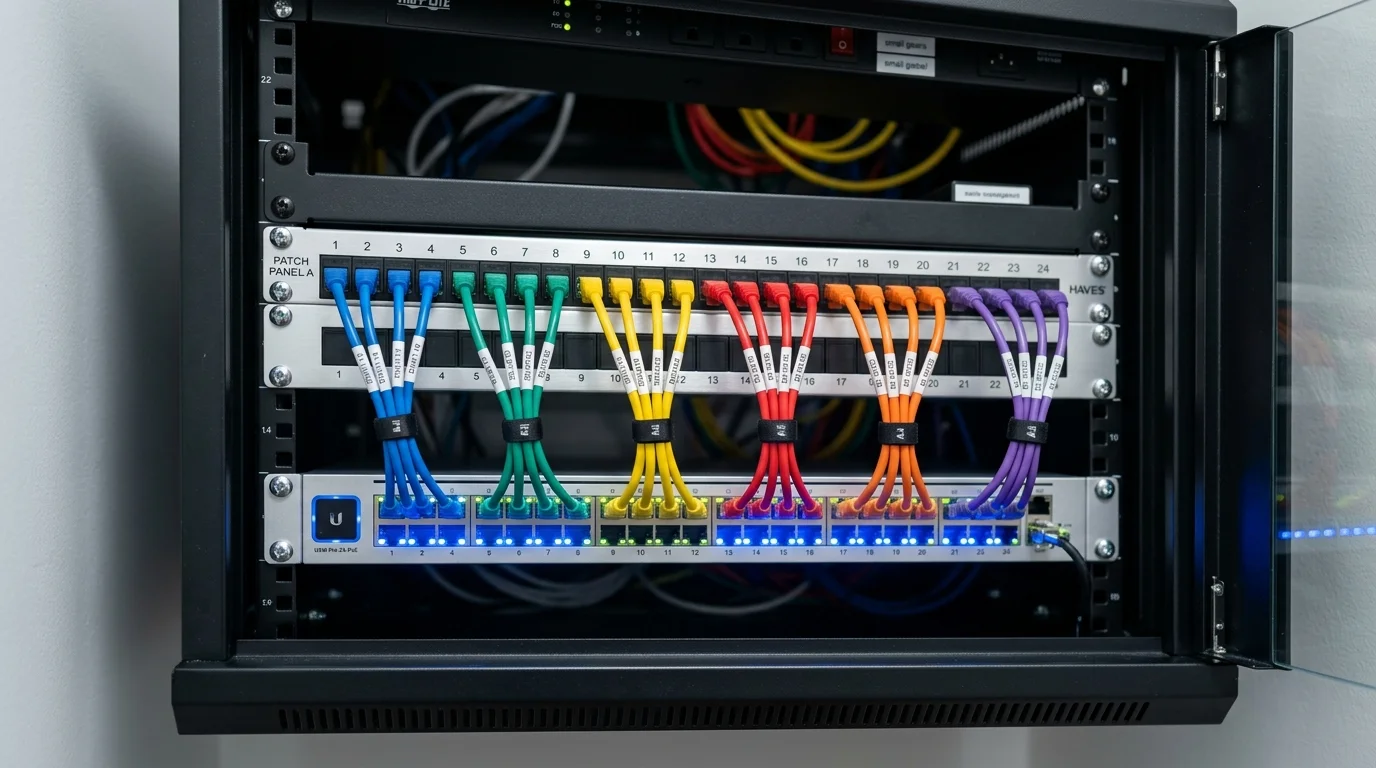
For commercial clients—including retail shops, hotels, B&Bs, pubs, restaurants, car parks, apartment blocks, student HMOs, warehouses, farms, caravan parks, and construction sites—we scale up to industrial specifications. Commercial deployments incorporate NDAA-compliant Uniview, Dahua WizMind, and Hikvision AcuSense/DarkFighter hardware, 25x–42x optical zoom auto-tracking PTZ domes, dedicated ANPR number-plate recognition lanes, dSCR communal IRS satellite multiswitches, EN 54 / BS 5839-6 Grade D1 interlinked wireless fire detection, and rack-mounted 19-inch Cat6A patch panels—all backed by £10 Million Public Liability Insurance and full RAMS documentation.
ADI Communications UK Trade Engineering & Hardware Specification Matrix
Side-by-side comparison of physical cabling, mounting hardware, compliance standards, and diagnostic verification across our core low-voltage disciplines.
BS 5839-6:2019 Grade D1 HMO Compliance, Commercial EN 54 & Line Insulation Tests
ADI Communications Canonical UK ‘From’ Pricing Ledger (2026)
Single-source transparent pricing across all domestic and commercial services. Every installation includes calibrated testing, mobile app setup, and our workmanship guarantee.
Service Category
Canonical ‘From’ Price
What Is Included in Standard Fitting
Warranty & Ongoing Fees
Customer-Bought CCTV Kit Installation
From £199 + VAT
Physical mounting of your cameras (Hikvision, Swann, Reolink, Tapo), pure copper cabling, NVR & app setup
3-Yr Workmanship • £0 Monthly Fee
Supply & Fit 4K ColorVu / TiOC CCTV Packages
From £299 / £495 + VAT
1 to 4+ 4K ColorVu/TiOC PoE cameras, WD Purple NVR, pure copper Cat6 cabling, junction boxes & smartphone app
Solid copper Cat6/Cat6A Ethernet point or hardwired PoE Wi-Fi 6 access point with Fluke continuity certification
3-Yr Cabling & Termination Warranty
Telephone Engineer, Cable Repairs & Video Doorbells
From £79 / £85 + VAT
Master socket relocation/repair, severed coax/Cat6 weatherproof splicing, or hardwired smart video doorbell fitting
3-Yr Workmanship Guarantee
Direct Answer Engineering FAQs
Frequently Asked Questions: Data Cabling for Homes UK: Cat6 vs Cat6a Residential Network Guide
Who carries out the installation and diagnostic work at ADI Communications?+
Every survey, installation, and fault-finding visit is carried out directly by company founder and Lead Engineer Gary Pearce. We never sub-contract jobs to third-party agency labourers. Gary holds over 25 years of hands-on experience and formal NVQ qualifications across aerials, satellite, structured data cabling, fibre optics, electrical installations, and CCTV security systems.
Can you install CCTV cameras, Starlink dishes, or smart doorbells that I have already bought myself?+
Yes. Alongside supplying and fitting our own trade-grade Hikvision ColorVu, Dahua TiOC, Uniview, and Ajax packages, we offer a dedicated customer-supplied hardware installation service. We mount your units using trade-grade stainless steel or galvanised fixings, replace flimsy factory patch leads with 100% solid copper exterior cabling, weatherproof all masonry entry points, and configure your mobile apps.
Why do you insist on 100% solid bare copper Cat6 and WF100 coaxial cable instead of cheaper CCA wire?+
Copper-Clad Aluminium (CCA) cable has roughly 55% higher DC electrical resistance than pure bare copper. Over runs exceeding 20 metres, CCA causes severe Power over Ethernet (PoE) voltage drop—making 4K CCTV cameras reboot at night when their ColorVu or infrared LEDs switch on—and suffers rapid oxidation inside damp outdoor junction boxes. Solid bare copper guarantees full IEEE 802.3af/at PoE delivery, 10Gbps bandwidth headroom, and a 15-year+ outdoor service life.
Are there any mandatory monthly subscription fees for your CCTV or Ajax alarm systems?+
No. You own all installed hardware outright from day one with £0 mandatory monthly fees to ADI Communications. Our 4K PoE CCTV systems record 24/7 onto a local Western Digital Purple surveillance hard drive inside your NVR, and both Hik-Connect/DMSS and the Ajax Security System smartphone apps send instant push alerts and live HD video to your phone completely free of charge.
Which UK regions and postcode districts does ADI Communications cover?+
We operate equipped mobile workshop vans across West, South, North, and East Yorkshire (Leeds, Bradford, Wakefield, Sheffield, Huddersfield, Halifax, York, Harrogate, Doncaster, Hull), Lancashire and Greater Manchester (Manchester, Preston, Blackburn, Burnley, Bolton, Wigan, Oldham, Rochdale, Stockport), Cheshire (Warrington, Chester, Crewe, Macclesfield), Humberside and Lincolnshire (Grimsby, Scunthorpe, Cleethorpes), Nottinghamshire, and Teesside/County Durham.
How do you mount heavy TVs safely onto modern dot-and-dab or hollow plasterboard walls?+
On dot-and-dab walls—where 12.5mm plasterboard sits over a 15mm–25mm air gap in front of thermal blockwork—we drill 100mm deep into the structural blockwork and insert steel-cored CoreFix 100 anchors so the steel sleeve bridges the void without crushing the plasterboard. On timber or metal stud walls, we anchor into the studs and deploy heavy-duty M6 SnapToggle steel wing anchors rated up to 120kg.
How do you protect slate and rosemary tile roofs when installing SpaceX Starlink or TV aerials?+
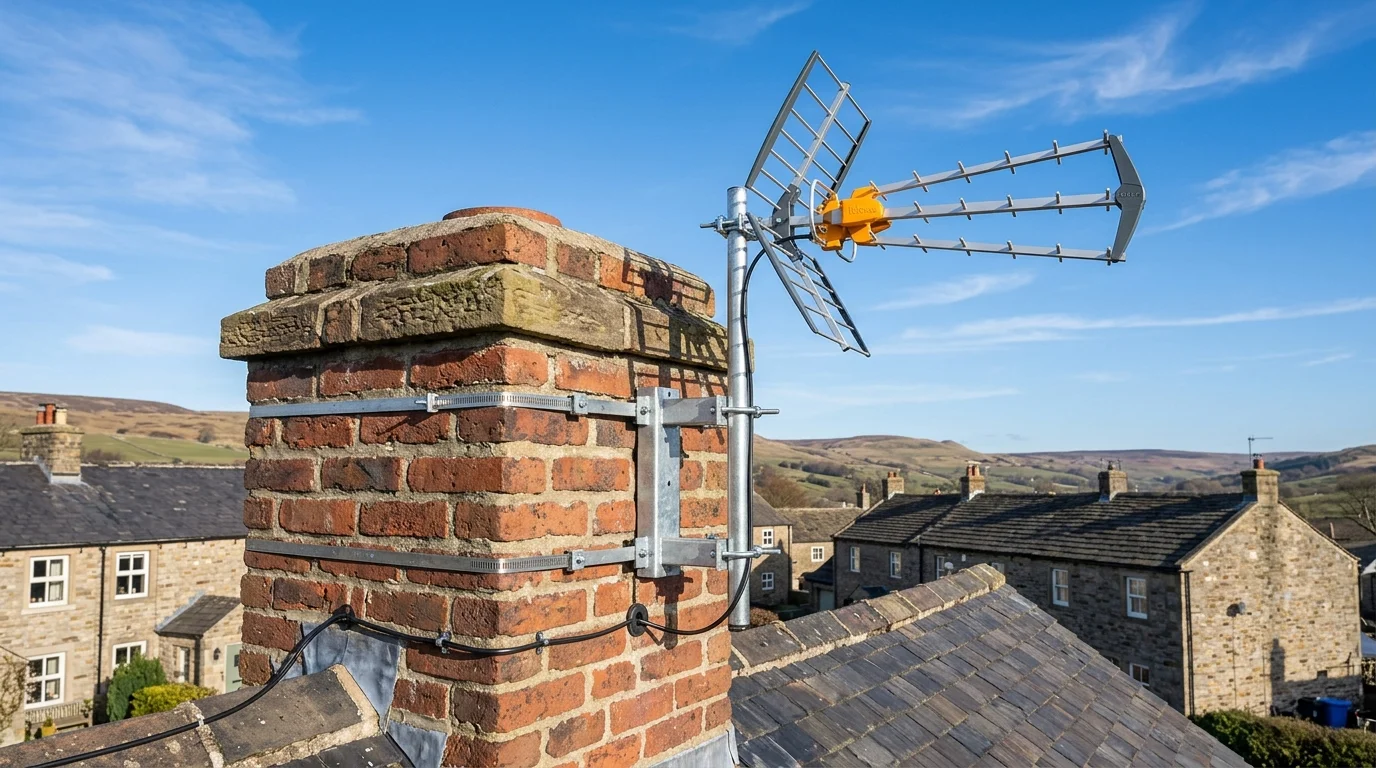
We never bolt brackets through roof slates or clay tiles. On homes with a sound chimney stack, we fit a non-drill stainless steel chimney lashing cradle using twin 5mm steel tension wires wrapped around the stack—distributing wind loads across four courses of brickwork without drilling a single hole into the mortar. On properties without chimneys, we mount heavy-duty hot-dip galvanised stand-off brackets into the solid gable-end masonry below the bargeboard.
What is the best way to get fast Wi-Fi into a garden office, summerhouse, or outbuilding?+
Plug-in powerline adapters fail across separate RCD consumer unit circuits, and domestic mesh nodes cannot push 5GHz signals through double glazing and foil-backed outbuilding insulation. We engineer two permanent solutions: either a direct-burial Steel Wire Armoured (SWA) Cat6A copper cable feeding an internal PoE Wi-Fi 6 access point, or a matched pair of external 5GHz/60GHz point-to-point wireless bridge dishes when a patio or driveway prevents trenching.
Are your commercial and HMO installations fully insured and compliant with UK regulations?+
Yes. ADI Communications carries £10,000,000 Public Liability Insurance, provides full Risk Assessments and Method Statements (RAMS) for commercial sites, and issues formal commissioning certificates and VAT invoices across BS EN 62676-4 (CCTV), BS 5839-6 Grade D1 / EN 54 (wireless fire detection), and BS EN 50131 Grade 2 (intruder alarms).
What warranty do you provide on your installations and repairs?+
Every installation and structural mounting bracket fitted by Gary Pearce is backed by our comprehensive 1-to-3 Year Workmanship and Hardware Guarantee. If any bracket, cable termination, or supplied component experiences a fault under normal operating conditions, we return and rectify it promptly with zero call-out charge.
Regional Field Engineering Standards Across Yorkshire, Lancashire & the North
Every property across Northern England and the Midlands presents distinct environmental, structural, and radio-frequency conditions. On high-altitude Northern properties across Saddleworth, Holmfirth, Hebden Bridge, Todmorden, Skipton, Ilkley, and Harrogate, rooftop SpaceX Starlink Gen 3 dishes and digital Freeview HD aerials face winter wind gusts exceeding 80 to 90mph alongside driving sleet and horizontal rain. Standard lightweight alloy brackets or single-band chimney straps twist out of alignment during the first autumn gale. That is why our rooftop installations use heavy-gauge 2-inch steel masts, twin 18-inch stainless steel chimney lashing cradles tensioned with 5mm galvanised wire, and hot-dip galvanised stand-off wall brackets anchored into solid mortar courses with M10 bolts.
Inside heritage Victorian and Edwardian stone terraces, converted mills, and rural farmhouses across Leeds, Bradford, Wakefield, Sheffield, Huddersfield, York, Manchester, Bolton, Blackburn, and Preston, 18-inch solid stone internal walls and foil-backed Celotex cavity insulation block 5GHz and 6GHz wireless signals completely. Relying on wireless-only plug-in Wi-Fi boosters or battery-powered security cameras in these properties leads to constant dropouts and missed motion events. By routing discrete, UV-stabilised external or internal 100% solid bare copper Cat6 and Cat6A Ethernet links from your primary router to hardwired ceiling access points (Ubiquiti UniFi, TP-Link Omada, Deco, or eero Pro) and PoE security cameras, we deliver full High-Speed Throughput and unshakeable 24/7 recording into every room and outbuilding.
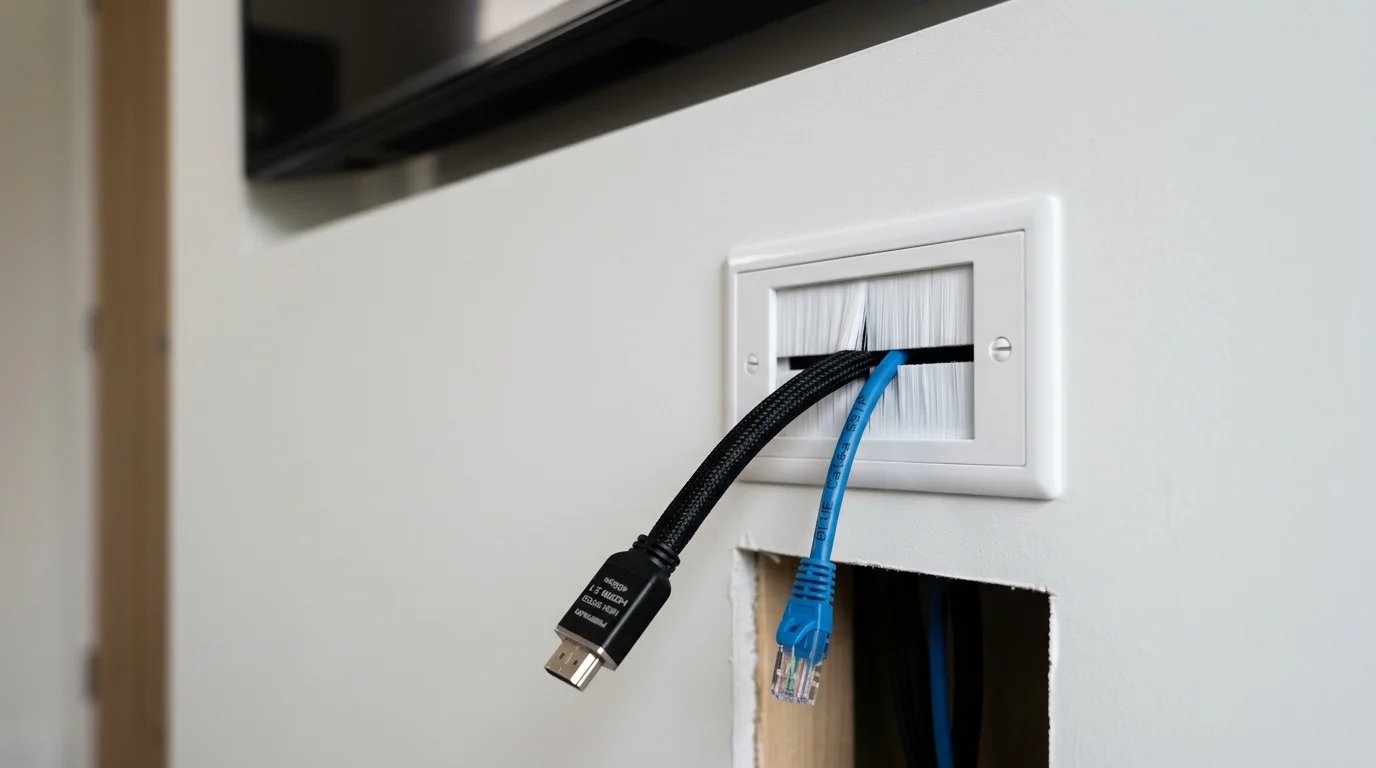
On modern new-build housing estates across Doncaster, Rotherham, Barnsley, Pontefract, Castleford, Warrington, Stockport, Hull, Scunthorpe, Grimsby, Mansfield, and Teesside, internal walls are almost universally constructed from 12.5mm dot-and-dab plasterboard bonded over thermalite breeze blocks or lightweight metal studwork. Hanging a 65-inch, 75-inch, or 85-inch OLED, QLED, or Sky Glass television on standard plastic rawlplugs risks pulling the plasterboard away from the wall. Our TV wall mounting service uses steel-cored CoreFix 100 dot-and-dab anchors that bridge the cavity air gap directly into the load-bearing blockwork, paired with M6 SnapToggle hollow-wall toggles rated to 120kg and concealed in-wall brush plates so not a single HDMI or power lead is visible.
Whether you are booking a domestic home upgrade, an installation of customer-supplied CCTV or Starlink hardware, an emergency coaxial or Cat6 cable splice repair, an independent Openreach NTE5C master socket relocation, or a multi-camera commercial and HMO compliance project, you deal directly with Lead Engineer Gary Pearce from your initial telephone enquiry right through to final calibrated testing and handover.